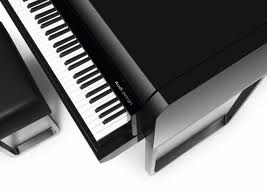
 Daily Piano Sheets is a web site for those who wants to access popular sheet music easily,
letting them download the sheet music for free for trial purposes.
It's completely free to download and try the listed sheet music, but you have to delete the files after 24 hours of trial period.
Don't forget, if you like the piece of music you have just learned playing,
treat the artist with respect, and go buy the original sheet music.
Daily Piano Sheets is a web site for those who wants to access popular sheet music easily,
letting them download the sheet music for free for trial purposes.
It's completely free to download and try the listed sheet music, but you have to delete the files after 24 hours of trial period.
Don't forget, if you like the piece of music you have just learned playing,
treat the artist with respect, and go buy the original sheet music.
Latest Sheet Music
Domenico Scarlatti
Giuseppe Domencio Scarlatti, Madrid, Spain. An Italian composer who has spent most of his life in Spain and Portugal. Although he lived in the Baroque period, his music mostly influenced the classical period.
Enya
Enya (born Eithne Patricia Nà Bhraonáinon May 17, 1961, Gaoth Dobhair, County Donegal, Ireland), sometimes presented in the media as Enya Brennan, is an Irish singer, instrumentalist and composer. She is Ireland's best-selling solo artist and is officially the country's second biggest musical export (after U2). Her works have earned her four Grammy Awards and an Academy Award nomination, and she is also famous for performing in 10 different languages during her lengthy career. Enya is an approximate transcription of how Eithne is pronounced in her native Irish, in the Donegal dialect.
Emily Haines
Emily Savitri Haines is a Canadian singer and songwriter. She is the lead singer, keyboardist and songwriter of the rock band Metric and a member of Broken Social Scene. As a solo artist, she has performed under her own name and under the moniker Emily Haines & The Soft Skeleton.
MADZ
The University of the Philippines Madrigal Singers (UPMS), also known as the Philippine Madrigal Singers or simply Madz, is one of the major choral groups based in the University of the Philippines, Diliman. Its current conductor and musical director is Mark Anthony Carpio. They are the first choir in the world to win the European Grand Prix for Choral Singing twice (in 1997 and in 2007). To date, only four choirs in the world have attained this achievement.
Jay Chou
Jay Chou (traditional Chinese: 周杰倫; simplified Chinese: 周杰伦; pinyin: Zhōu Jiélún; Wade-Giles: Chou Chieh-lun; Pe̍h-ōe-jī: Chiu Kia̍t-lûn) (born January 18, 1979) is a Taiwanese musician, singer, producer, actor and director who has won the World Music Award four times. He is well-known for composing all his own songs and songs for other singers. In 1998 he was discovered in a talent contest where he displayed his piano and song-writing skills. Over the next two years, he was hired to compose for popular Chinese singers. Although he was trained in classical music, Chou combines Chinese and Western music styles to produce songs that fuse R&B, rock and pop genres, covering issues such as domestic violence, war, and urbanization.
In 2000 Chou released his first album, titled Jay, under the record company Alfa Music. Since then he has released one album per year, selling several million copies each. His music has gained recognition throughout Asia, most notably in regions such as Taiwan, China, Hong Kong, Japan, Malaysia, Indonesia, Singapore, Thailand, Vietnam and in overseas Asian communities, winning more than 20 awards each year. He has sold over 25 million albums worldwide. He debuted his acting career in Initial D (2005), for which he won Best Newcomer Actor in Golden Horse Awards, and was nominated for Best Supporting Actor by Hong Kong Film Awards for his role in Curse of the Golden Flower (2006). His career now extends into directing and running his own record company JVR Music. He has also endorsed various models of Media Players released by Onda in which he appears on the box, and his signature and likeness is printed on the back of certain models of these players.
In 2000 Chou released his first album, titled Jay, under the record company Alfa Music. Since then he has released one album per year, selling several million copies each. His music has gained recognition throughout Asia, most notably in regions such as Taiwan, China, Hong Kong, Japan, Malaysia, Indonesia, Singapore, Thailand, Vietnam and in overseas Asian communities, winning more than 20 awards each year. He has sold over 25 million albums worldwide. He debuted his acting career in Initial D (2005), for which he won Best Newcomer Actor in Golden Horse Awards, and was nominated for Best Supporting Actor by Hong Kong Film Awards for his role in Curse of the Golden Flower (2006). His career now extends into directing and running his own record company JVR Music. He has also endorsed various models of Media Players released by Onda in which he appears on the box, and his signature and likeness is printed on the back of certain models of these players.
Julio Domínguez
Violinist, Philharmonic Orchestra of Buenos Aires; Member, Gianneo String Quartet (which has toured to the major Chamber festivals in the world spreading Argentine music). Awards: Argentine Society of Music Critics Prize (three times, with Gianneo). Training: violin and viola at the Menuhin Academy (London, Switzerland) and in the Reina Sofia School in Madrid.
Saiyuki
Saiyuki (最遊記, Saiyūki) is a manga series by Kazuya Minekura which was serialized in G-Fantasy from 1997 to 2002. It spawned multiple manga sequels, anime adaptations, video games and other media. The story is loosely based on the 16th century Chinese novel Journey to the West.
Don Aliquo
An active performer, educator and recording artist, saxophonist Don Aliquo has released several recordings, appeared on many others and continues to inspire audiences, nationally and internationally.His playing has been described as a “fluid and articulate player with a flow of always surprising ideas complete with a dexterous technique and an incredibly smooth tenor sound.” Currently Professor of Saxophone and Jazz Studies at Middle Tennessee State University he is a Conn-Selmer and Vandoren artist
Vampire Knight
Yuki's oldest memory is that of a winter night, when she was attacked by a vampire and rescued by another. Ten years later, Yuki, the adopted daughter of the director of the Cross Academy, has grown up and now acts as a guardian of the Day Class.
Traditional
Alfredo Catalani
Alfredo Catalani was an Italian operatic composer. He is best remembered for his operas Loreley and La Wally. La Wally was composed to a libretto by Luigi Illica, and features Catalani's most famous aria "Ebben? Ne andrò lontana."
Igor Stravinsky
Igor Fyodorovich Stravinsky (17 June 1882 – 6 April 1971) was a Russian-born, naturalised French, later naturalised American composer, pianist, and conductor.
He is widely acknowledged as one of the most important and influential composers of 20th century music. He was a quintessentially cosmopolitan Russian who was named by Time magazine as one of the 100 most influential people of the century. He became a naturalised French citizen in 1934 and a naturalized US citizen in 1945. In addition to the recognition he received for his compositions, he also achieved fame as a pianist and a conductor, often at the premieres of his works.
Stravinsky's compositional career was notable for its stylistic diversity. He first achieved international fame with three ballets commissioned by the impresario Sergei Diaghilev and performed by Diaghilev's Ballets Russes (Russian Ballets): The Firebird (1910), Petrushka (1911/1947), and The Rite of Spring (1913). The Rite, whose premiere provoked a riot, transformed the way in which subsequent composers thought about rhythmic structure, and was largely responsible for Stravinsky's enduring reputation as a musical revolutionary, pushing the boundaries of musical design.
After this first Russian phase Stravinsky turned to neoclassicism in the 1920s. The works from this period tended to make use of traditional musical forms (concerto grosso, fugue, symphony), frequently concealed a vein of intense emotion beneath a surface appearance of detachment or austerity, and often paid tribute to the music of earlier masters, for example J.S. Bach and Tchaikovsky.
In the 1950s he adopted serial procedures, using the new techniques over his last twenty years. Stravinsky's compositions of this period share traits with examples of his earlier output: rhythmic energy, the construction of extended melodic ideas out of a few two- or three-note cells, and clarity of form, of instrumentation, and of utterance.
He also published a number of books throughout his career, almost always with the aid of a collaborator, sometimes uncredited. In his 1936 autobiography, Chronicles of My Life, written with the help of Walter Nouvel, Stravinsky included his well-known statement that "music is, by its very nature, essentially powerless to express anything at all." With Alexis Roland-Manuel and Pierre Souvtchinsky he wrote his 1939–40 Harvard University Charles Eliot Norton Lectures, which were delivered in French and later collected under the title Poétique musicale in 1942 (translated in 1947 as Poetics of Music). Several interviews in which the composer spoke to Robert Craft were published as Conversations with Igor Stravinsky. They collaborated on five further volumes over the following decade.
He is widely acknowledged as one of the most important and influential composers of 20th century music. He was a quintessentially cosmopolitan Russian who was named by Time magazine as one of the 100 most influential people of the century. He became a naturalised French citizen in 1934 and a naturalized US citizen in 1945. In addition to the recognition he received for his compositions, he also achieved fame as a pianist and a conductor, often at the premieres of his works.
Stravinsky's compositional career was notable for its stylistic diversity. He first achieved international fame with three ballets commissioned by the impresario Sergei Diaghilev and performed by Diaghilev's Ballets Russes (Russian Ballets): The Firebird (1910), Petrushka (1911/1947), and The Rite of Spring (1913). The Rite, whose premiere provoked a riot, transformed the way in which subsequent composers thought about rhythmic structure, and was largely responsible for Stravinsky's enduring reputation as a musical revolutionary, pushing the boundaries of musical design.
After this first Russian phase Stravinsky turned to neoclassicism in the 1920s. The works from this period tended to make use of traditional musical forms (concerto grosso, fugue, symphony), frequently concealed a vein of intense emotion beneath a surface appearance of detachment or austerity, and often paid tribute to the music of earlier masters, for example J.S. Bach and Tchaikovsky.
In the 1950s he adopted serial procedures, using the new techniques over his last twenty years. Stravinsky's compositions of this period share traits with examples of his earlier output: rhythmic energy, the construction of extended melodic ideas out of a few two- or three-note cells, and clarity of form, of instrumentation, and of utterance.
He also published a number of books throughout his career, almost always with the aid of a collaborator, sometimes uncredited. In his 1936 autobiography, Chronicles of My Life, written with the help of Walter Nouvel, Stravinsky included his well-known statement that "music is, by its very nature, essentially powerless to express anything at all." With Alexis Roland-Manuel and Pierre Souvtchinsky he wrote his 1939–40 Harvard University Charles Eliot Norton Lectures, which were delivered in French and later collected under the title Poétique musicale in 1942 (translated in 1947 as Poetics of Music). Several interviews in which the composer spoke to Robert Craft were published as Conversations with Igor Stravinsky. They collaborated on five further volumes over the following decade.
Rihanna
Rihanna (born Robyn Rihanna Fenty; February 20, 1988) is a Barbadian singer, model and fashion designer. She is the second artist, and first female, from Barbados to have received a Grammy Award (the first being Jimmy Senya Haynes). Rihanna is currently signed to the Def Jam Recordings label. She has attained four Billboard Hot 100 number ones thus far ("SOS", "Umbrella", "Take a Bow", and "Disturbia"), tying her with Mariah Carey and Beyoncé as the female solo artist with the most number ones this decade.
Rihanna came to fame in 2005 with the release of her debut album Music of the Sun, which featured her breakthrough single "Pon de Replay". Less than a year later, Rihanna released A Girl Like Me and gave her first number one single, "SOS". In 2007, Rihanna released her third studio album, Good Girl Gone Bad. The album has yielded six hit singles including five worldwide number one singles "Umbrella", "Don't Stop the Music" and "Take A Bow". Since the release of her debut album, Rihanna has amassed eleven top 40 hit singles in the U.S.
Rihanna came to fame in 2005 with the release of her debut album Music of the Sun, which featured her breakthrough single "Pon de Replay". Less than a year later, Rihanna released A Girl Like Me and gave her first number one single, "SOS". In 2007, Rihanna released her third studio album, Good Girl Gone Bad. The album has yielded six hit singles including five worldwide number one singles "Umbrella", "Don't Stop the Music" and "Take A Bow". Since the release of her debut album, Rihanna has amassed eleven top 40 hit singles in the U.S.
Franz Liszt
Franz Liszt (Hungarian: Ferencz Liszt, in modern usage Ferenc Liszt, from 1859 to 1865 officially Franz Ritter von Liszt) (October 22, 1811 – July 31, 1886) was a Hungarian composer, virtuoso pianist and teacher. He was also the father-in-law of Richard Wagner. In 1865 he became abbot in the Roman Catholic Church.
Liszt became renowned throughout Europe during the 19th century for his great skill as a performer. He was said by his contemporaries to have been the most technically advanced pianist of his age and perhaps the greatest pianist of all time. He was also an important and influential composer, a notable piano teacher, a conductor who contributed significantly to the modern development of the art, and a benefactor to other composers and performers, notably Richard Wagner, Hector Berlioz, Camille Saint-Saëns, Edvard Grieg and Alexander Borodin.
As a composer, Liszt was one of the most prominent representatives of the "Neudeutsche Schule" ("New German School"). He left behind a huge and diverse body of work, in which he influenced his forward-looking contemporaries and anticipated some 20th-century ideas and trends. Some of his most notable contributions were the invention of the symphonic poem, developing the concept of thematic transformation as part of his experiments in musical form and making radical departures in harmony.
Liszt became renowned throughout Europe during the 19th century for his great skill as a performer. He was said by his contemporaries to have been the most technically advanced pianist of his age and perhaps the greatest pianist of all time. He was also an important and influential composer, a notable piano teacher, a conductor who contributed significantly to the modern development of the art, and a benefactor to other composers and performers, notably Richard Wagner, Hector Berlioz, Camille Saint-Saëns, Edvard Grieg and Alexander Borodin.
As a composer, Liszt was one of the most prominent representatives of the "Neudeutsche Schule" ("New German School"). He left behind a huge and diverse body of work, in which he influenced his forward-looking contemporaries and anticipated some 20th-century ideas and trends. Some of his most notable contributions were the invention of the symphonic poem, developing the concept of thematic transformation as part of his experiments in musical form and making radical departures in harmony.
Ludwig van Beethoven
Ludwig van Beethoven (/ˈlʊdvɪɡ væn ˈbeɪt(h)oʊvən/ (About this soundlisten); German: (About this soundlisten); baptised 17 December 1770 – 26 March 1827) was a German composer and pianist. A crucial figure in the transition between the classical and romantic eras in classical music, he remains one of the most recognized and influential musicians of this period, and is considered to be one of the greatest composers of all time.
Beethoven was born in Bonn, the capital of the Electorate of Cologne, and part of the Holy Roman Empire. He displayed his musical talents at an early age and was vigorously taught by his father Johann van Beethoven, and was later taught by composer and conductor Christian Gottlob Neefe. At age 21, he moved to Vienna and studied composition with Joseph Haydn. Beethoven then gained a reputation as a virtuoso pianist, and was soon courted by Prince Lichnowsky for compositions, which resulted in Opus 1 in 1795.
Beethoven was born in Bonn, the capital of the Electorate of Cologne, and part of the Holy Roman Empire. He displayed his musical talents at an early age and was vigorously taught by his father Johann van Beethoven, and was later taught by composer and conductor Christian Gottlob Neefe. At age 21, he moved to Vienna and studied composition with Joseph Haydn. Beethoven then gained a reputation as a virtuoso pianist, and was soon courted by Prince Lichnowsky for compositions, which resulted in Opus 1 in 1795.
Duke Ellington
Edward Kennedy "Duke" Ellington (April 29, 1899 â May 24, 1974) was an American composer, pianist, and bandleader.
Recognized during his life as one of the most influential figures in jazz, if not in all American music, Ellington's reputation has increased since his death, including a special award citation from the Pulitzer Prize Board.
Ellington called his style and sound "American Music" rather than jazz, and liked to describe those who impressed him as "beyond category", including many of the musicians who served with his orchestra, some of whom were themselves considered among the giants of jazz and remained with Ellington's orchestra for decades. While many were noteworthy in their own right, it was Ellington that melded them into one of the most well-known orchestral units in the history of jazz. He often composed specifically for the style and skills of these individuals, such as "Jeep's Blues" for Johnny Hodges, "Concerto for Cootie" ("Do Nothing Till You Hear from Me") for Cootie Williams and "The Mooche" for Tricky Sam Nanton. He also recorded songs written by his bandsmen, such as Juan Tizol's "Caravan" and "Perdido" which brought the "Spanish Tinge" to big-band jazz. After 1941, he frequently collaborated with composer-arranger Billy Strayhorn, who he called his alter-ego.
One of the twentieth century's best-known African-American celebrities, Ellington recorded for many American record companies, and appeared in several films. Ellington and his orchestra toured the United States and Europe regularly before and after World War II. Ellington led his band from 1923 until his death in 1974. His son Mercer Ellington took over the band until his death from cancer in 1996. Paul Ellington, Mercer's youngest son, took over the Orchestra from there and after his mother's passing took over the Estate of Duke and Mercer Ellington.
Recognized during his life as one of the most influential figures in jazz, if not in all American music, Ellington's reputation has increased since his death, including a special award citation from the Pulitzer Prize Board.
Ellington called his style and sound "American Music" rather than jazz, and liked to describe those who impressed him as "beyond category", including many of the musicians who served with his orchestra, some of whom were themselves considered among the giants of jazz and remained with Ellington's orchestra for decades. While many were noteworthy in their own right, it was Ellington that melded them into one of the most well-known orchestral units in the history of jazz. He often composed specifically for the style and skills of these individuals, such as "Jeep's Blues" for Johnny Hodges, "Concerto for Cootie" ("Do Nothing Till You Hear from Me") for Cootie Williams and "The Mooche" for Tricky Sam Nanton. He also recorded songs written by his bandsmen, such as Juan Tizol's "Caravan" and "Perdido" which brought the "Spanish Tinge" to big-band jazz. After 1941, he frequently collaborated with composer-arranger Billy Strayhorn, who he called his alter-ego.
One of the twentieth century's best-known African-American celebrities, Ellington recorded for many American record companies, and appeared in several films. Ellington and his orchestra toured the United States and Europe regularly before and after World War II. Ellington led his band from 1923 until his death in 1974. His son Mercer Ellington took over the band until his death from cancer in 1996. Paul Ellington, Mercer's youngest son, took over the Orchestra from there and after his mother's passing took over the Estate of Duke and Mercer Ellington.
Nana Mizuki
Nana Mizuki is a Japanese voice actress, singer and narrator from Niihama, Ehime. She is represented by the agency StarCrew. Mizuki was trained as an enka singer, releasing one single under her birth name, Nana Kondō, in 1993 and made her debut as a voice actress in 1996.
Jérémie Brenner
A sheet of music paper, a keyboard, a pencil eraser. Range, a chord, arpeggiated an agreement, what tone? A picture, a flower, a landscape, a stream, the song of a bird. Gay, lively, sad, melancholy? What's my mood this morning? This will result in a canvas, a sentence, small, large? A minor key, major? What punctuation? Grand total? Some instruments?
Many moments of doubt, crushed leaves, I start all of a sudden it runs, I still fast, I hear in my head, the sweat, three minutes of music, how many hours? I do not count. So be nice, listeners, stop a moment and give me your assessment.
Many moments of doubt, crushed leaves, I start all of a sudden it runs, I still fast, I hear in my head, the sweat, three minutes of music, how many hours? I do not count. So be nice, listeners, stop a moment and give me your assessment.
Danguolės Beinarytės
Danguolė Beinarytė (born April 29, 1971 in Kaunas) is the conductor of the Lithuanian Choir. Organist, choirmaster, composer Pranciškas Beinaris and ...
Keith Jarrett
Keith Jarrett (born May 8, 1945 in Allentown, Pennsylvania) is an American pianist and composer.
His career started with Art Blakey, Charles Lloyd and Miles Davis. Since the early 1970s he has enjoyed a great deal of success in both classical music and jazz, as a group leader and a solo performer. His improvisation technique combines not only jazz, but also other forms of music, especially classical, gospel, blues and ethnic folk music.
In 2003 he received the Polar Music Prize, being the first (and to this day only) recipient not sharing the prize with anyone else.
His career started with Art Blakey, Charles Lloyd and Miles Davis. Since the early 1970s he has enjoyed a great deal of success in both classical music and jazz, as a group leader and a solo performer. His improvisation technique combines not only jazz, but also other forms of music, especially classical, gospel, blues and ethnic folk music.
In 2003 he received the Polar Music Prize, being the first (and to this day only) recipient not sharing the prize with anyone else.
Michael Buble
Michael Steven Bublé (born 9 September 1975) is a Canadian big band singer. He won several awards, including a Grammy and multiple Juno Awards. While achieving modest chart success in the United States, his 2003 self-titled album has reached the top ten in Lebanon, the UK and his home country. However, he did find commercial success in the U.S. with his 2005 album It's Time. He has sold over 18 million albums. Michael has also appeared on the TV series Rove four times.
The album Michael Bublé was released by Warner Bros. Records just before Valentine's Day in 2003. The album was actually first released by the Warner company in South Africa, where the album went into the Top 5 and was certified Gold. Soon after that, it entered the Canadian album charts. As success in the USA was marginal at best, Bublé started visiting countries all over the world, with the album being successful in places like the Philippines and Singapore. He then moved on to placed like Italy and eventually had chart success in the UK, U.S., Australia and elsewhere soon followed with the album going Platinum and reaching the top ten of the album charts in the UK and Canada and going all the way to #1 in Australia. The album has reached the top 50 of the Billboard 200 album charts in the U.S. His version of George Michael's "Kissing a Fool" was released as a single from the album and reached the top 30 of the Billboard Hot Adult Contemporary Tracks chart. "How Can You Mend a Broken Heart?" reached the top 30 of the Billboard Adult Contemporary chart as well. His third single "Sway" also reached the top 30 of the Adult Contemporary chart, while a Junkie XL remix of the song reached the top 20 in Australia in May 2004.
Bublé's second studio album, It's Time, debuted as a hugely successful performance. The album reached number 7 on the Billboard 200 album chart and number 2 on the ARIA Album Charts in Australia. It's Time also debuted at number 4 on the UK Album Charts. The album features covers of Beatles and Ray Charles songs, and the hit single "Home".
The album Michael Bublé was released by Warner Bros. Records just before Valentine's Day in 2003. The album was actually first released by the Warner company in South Africa, where the album went into the Top 5 and was certified Gold. Soon after that, it entered the Canadian album charts. As success in the USA was marginal at best, Bublé started visiting countries all over the world, with the album being successful in places like the Philippines and Singapore. He then moved on to placed like Italy and eventually had chart success in the UK, U.S., Australia and elsewhere soon followed with the album going Platinum and reaching the top ten of the album charts in the UK and Canada and going all the way to #1 in Australia. The album has reached the top 50 of the Billboard 200 album charts in the U.S. His version of George Michael's "Kissing a Fool" was released as a single from the album and reached the top 30 of the Billboard Hot Adult Contemporary Tracks chart. "How Can You Mend a Broken Heart?" reached the top 30 of the Billboard Adult Contemporary chart as well. His third single "Sway" also reached the top 30 of the Adult Contemporary chart, while a Junkie XL remix of the song reached the top 20 in Australia in May 2004.
Bublé's second studio album, It's Time, debuted as a hugely successful performance. The album reached number 7 on the Billboard 200 album chart and number 2 on the ARIA Album Charts in Australia. It's Time also debuted at number 4 on the UK Album Charts. The album features covers of Beatles and Ray Charles songs, and the hit single "Home".
Debussy
Achille-Claude Debussy (August 22, 1862 – March 25, 1918) was a French composer. Along with Maurice Ravel, he is considered one of the most prominent figures working within the field of Impressionist music, though he himself intensely disliked the term when applied to his compositions. Debussy was not only among the most important of all French composers but also was a central figure in all European music at the turn of the twentieth century.
Debussy's music virtually defines the transition from late-Romantic music to twentieth century modernist music. In French literary circles, the style of this period was known as Symbolism, a movement that directly inspired Debussy both as a composer and as an active cultural participant.
Debussy's music virtually defines the transition from late-Romantic music to twentieth century modernist music. In French literary circles, the style of this period was known as Symbolism, a movement that directly inspired Debussy both as a composer and as an active cultural participant.
Bill Evans
William John Evans, known as Bill Evans (August 16, 1929 – September 15, 1980) was an American jazz pianist. His use of impressionist harmony, inventive interpretation of traditional jazz repertoire, and trademark rhythmically independent, "singing" melodic lines influenced a generation of pianists, including Chick Corea, Herbie Hancock, John Taylor, Steve Kuhn, Don Friedman, Denny Zeitlin, Bobo Stenson and Keith Jarrett, as well as guitarists Lenny Breau and Pat Metheny. The music of Bill Evans continues to inspire younger pianists like Marcin Wasilewski, Fred Hersch, Ray Reach, Bill Charlap, Lyle Mays, Eliane Elias and arguably Brad Mehldau, early in his career.
Evans is an inductee of the Down Beat Jazz Hall of Fame.
Evans is an inductee of the Down Beat Jazz Hall of Fame.
Original Broadway Cast
Original Broadway Cast Musical group Musicals Record labels: Capitol Records, RCA Records, Geffen Records, MORE
Awards: Grammy Award for Best Musical Theater Album Songs Carrying The Banner Newsies (Original Broadway Cast Recording) · 2017 This World Will Remember Us Bonnie & Clyde · 2012 Brooklyn's Here Newsies (Original Broadway Cast Recording) ·
Awards: Grammy Award for Best Musical Theater Album Songs Carrying The Banner Newsies (Original Broadway Cast Recording) · 2017 This World Will Remember Us Bonnie & Clyde · 2012 Brooklyn's Here Newsies (Original Broadway Cast Recording) ·
David Lanz
David Lanz (born June 28, 1950 in Seattle, Washington) is a Grammy-nominated New Age pianist. He has released 13 albums, each having some chart success. His most famous album, Cristofori's Dream, topped the New Age charts in 1988, which was Number One on Billboard's first adult alternative/New Age chart for 27 weeks and eventually sold platinum. Natural States peaked at place 125 on the Billboard 200.
Lanz's goal is to have his music create an atmosphere of enlightenment. In an interview with Barnes & Noble, Lanz stated that he wanted to create an atmosphere similar to that of Steven Halpern's music, but with a "more popular hook in it".
Lanz has said himself, " is the most divinely inspired instrument on the planet. It presents a great attraction to our left-right brain relationship. My goal is to create entertainment that also provides enlightenment."
Lanz's goal is to have his music create an atmosphere of enlightenment. In an interview with Barnes & Noble, Lanz stated that he wanted to create an atmosphere similar to that of Steven Halpern's music, but with a "more popular hook in it".
Lanz has said himself, " is the most divinely inspired instrument on the planet. It presents a great attraction to our left-right brain relationship. My goal is to create entertainment that also provides enlightenment."
Plain White T's
Plain White T's are an American rock band from Lombard, Illinois, formed in 1997 by high school friends Tom Higgenson, Dave Tirio, and Ken Fletcher. They were joined a short time later by Steve Mast. The group had a mostly underground following in Chicago basements, clubs, and bars in its early years.
Georges Bizet
Georges Bizet (25 October 1838 – 3 June 1875) was a French composer and pianist of the Romantic era. He is best known for the opera Carmen.
Bizet was born at 26 rue de la Tour d'Auvergne in the 9th arrondissement of Paris in 1838. He was registered with the legal name Alexandre César Léopold Bizet, but he was baptised on 16 March 1840 with the first name Georges, and he was always known thereafter as Georges Bizet. His father Adolphe Armand Bizet (1810-86) was an amateur singer and composer, and his mother, Aimée Léopoldine Joséphine née Delsarte (1814-61), was the sister of the famous singing teacher François Delsarte.
He entered the Paris Conservatory of Music on 9 October 1848, a fortnight before his tenth birthday. His teachers there were Pierre Zimmermann (fugue and counterpoint; often assisted by his son-in-law Charles Gounod), Antoine François Marmontel (piano), François Benoist (organ) and, on Zimmermann's death, Fromental Halévy, whose daughter he himself later married. He won first prizes for organ and fugue in 1855 and completed his earliest compositions.
His first symphony, the Symphony in C, was written in November 1855, when he was seventeen, evidently as a student assignment. It was unknown to the world until 1933, when it was discovered in the archives of the Paris Conservatory library. Upon its first performance in 1935, it was immediately hailed as a junior masterwork and a welcome addition to the early Romantic period repertoire. The symphony bears a stylistic resemblance to the first symphony of Gounod, first played earlier in the same year, and which Bizet had arranged for two pianos although present-day listeners may discern a similarity to music of Franz Schubert, whose work was little known in France at the time the symphony was written.
In 1857, a setting of the one-act operetta Le docteur Miracle won him a share in a prize offered by Jacques Offenbach. He also won the music composition scholarship of the Prix de Rome, the conditions of which required him to study in Rome for three years. There, his talent developed as he wrote such works as the opera buffa Don Procopio (1858-59). There he also composed his only major sacred work, Te Deum (1858), which he submitted to the Prix Rodrigues competition, a contest for Prix de Rome winners only. Bizet failed to win the Prix Rodrigues, and the Te Deum score remained unpublished until 1971. He made two attempts to write another symphony in 1859, but destroyed the manuscripts in December of that year. Apart from this period in Rome, Bizet lived in the Paris area all his life.
Shortly after leaving Rome in July 1860, but while still touring in Italy, he had the idea of writing a symphony in which each of the four movements would be a musical evocation of a different Italian city – Rome, Venice, Florence and Naples. On hearing of his mother's serious illness he cut short his Italian travels and returned to Paris in September 1860; she died a year later. The Scherzo of the symphony was completed by November 1861, but it was not until 1866 that the first version of the whole symphony was written. He subjected it to a number of revisions through to 1871, but died before ever producing what he considered the definitive version. For this reason, the work is sometimes described as "unfinished", but this is an inaccurate description as it was fully scored. It was published in 1880 as the Roma Symphony.
Bizet was born at 26 rue de la Tour d'Auvergne in the 9th arrondissement of Paris in 1838. He was registered with the legal name Alexandre César Léopold Bizet, but he was baptised on 16 March 1840 with the first name Georges, and he was always known thereafter as Georges Bizet. His father Adolphe Armand Bizet (1810-86) was an amateur singer and composer, and his mother, Aimée Léopoldine Joséphine née Delsarte (1814-61), was the sister of the famous singing teacher François Delsarte.
He entered the Paris Conservatory of Music on 9 October 1848, a fortnight before his tenth birthday. His teachers there were Pierre Zimmermann (fugue and counterpoint; often assisted by his son-in-law Charles Gounod), Antoine François Marmontel (piano), François Benoist (organ) and, on Zimmermann's death, Fromental Halévy, whose daughter he himself later married. He won first prizes for organ and fugue in 1855 and completed his earliest compositions.
His first symphony, the Symphony in C, was written in November 1855, when he was seventeen, evidently as a student assignment. It was unknown to the world until 1933, when it was discovered in the archives of the Paris Conservatory library. Upon its first performance in 1935, it was immediately hailed as a junior masterwork and a welcome addition to the early Romantic period repertoire. The symphony bears a stylistic resemblance to the first symphony of Gounod, first played earlier in the same year, and which Bizet had arranged for two pianos although present-day listeners may discern a similarity to music of Franz Schubert, whose work was little known in France at the time the symphony was written.
In 1857, a setting of the one-act operetta Le docteur Miracle won him a share in a prize offered by Jacques Offenbach. He also won the music composition scholarship of the Prix de Rome, the conditions of which required him to study in Rome for three years. There, his talent developed as he wrote such works as the opera buffa Don Procopio (1858-59). There he also composed his only major sacred work, Te Deum (1858), which he submitted to the Prix Rodrigues competition, a contest for Prix de Rome winners only. Bizet failed to win the Prix Rodrigues, and the Te Deum score remained unpublished until 1971. He made two attempts to write another symphony in 1859, but destroyed the manuscripts in December of that year. Apart from this period in Rome, Bizet lived in the Paris area all his life.
Shortly after leaving Rome in July 1860, but while still touring in Italy, he had the idea of writing a symphony in which each of the four movements would be a musical evocation of a different Italian city – Rome, Venice, Florence and Naples. On hearing of his mother's serious illness he cut short his Italian travels and returned to Paris in September 1860; she died a year later. The Scherzo of the symphony was completed by November 1861, but it was not until 1866 that the first version of the whole symphony was written. He subjected it to a number of revisions through to 1871, but died before ever producing what he considered the definitive version. For this reason, the work is sometimes described as "unfinished", but this is an inaccurate description as it was fully scored. It was published in 1880 as the Roma Symphony.
Jed Whedon
Jed Tucker Whedon is an American screenwriter and musician, and the son of screenwriter Tom Whedon, grandson of screenwriter John Whedon, and the brother of screenwriter Zack Whedon and of producer/director/writer Joss Whedon.
Edvard Grieg
Edvard Hagerup Grieg (15 June 1843 – 4 September 1907) was a Norwegian composer and pianist who composed in the Romantic period. He is best known for his Piano Concerto in A minor, for his incidental music to Henrik Ibsen's play Peer Gynt (which includes Morning Mood and In the Hall of the Mountain King), and for his collection of piano miniatures Lyric Pieces. "Edvard" is sometimes mispelt as "Edward".
Grieg is renowned as a nationalist composer, drawing inspiration from Norwegian folk music. Early works include a symphony (which he later suppressed) and a piano sonata. He also wrote three sonatas for violin and piano and a cello sonata. His many short pieces for piano — often based on Norwegian folk tunes and dances — led some to call him the "Chopin of the North".
Concerto in A minor: 1. Allegro molto moderato
Performed by the University of Washington Symphony, conducted by Peter Erős (Neal O'Doan, piano)
Concerto in A minor: 1. Allegro molto moderato
Performed by the Skidmore College Orchestra (courtesy of Musopen)
Concerto in A minor: 2. Adagio
Performed by the University of Washington Symphony, conducted by Peter Erős (Neal O'Doan, piano)
Concerto in A minor: 2. Adagio
Performed by the Skidmore College Orchestra (courtesy of Musopen)
Concerto in A minor: 3. Allegro moderato molto e marcato
Performed by the University of Washington Symphony, conducted by Peter Erős (Neal O'Doan, piano)
Concerto in A minor: 3. Allegro moderato molto e marcato
Performed by the Skidmore College Orchestra (courtesy of Musopen)
Notturno, Op. 54, No. 4
Performed live by Mark Gasser
Problems listening to these files? See media help.
The Piano Concerto is his most popular work. Its champions have included the pianist and composer Percy Grainger, a personal friend of Grieg who played the concerto frequently during his long career. An arrangement of part of the work made an iconic television comedy appearance in the 1971 Morecambe and Wise Show, conducted by André Previn.
Some of the Lyric Pieces (for piano) are also well-known, as is the incidental music to Henrik Ibsen's play Peer Gynt, a play that Grieg found to be an arduous work to score properly. In a 1874 letter to his friend Frants Beyer, Grieg expressed his unhappiness with what is now considered one of his most popular compositions from Peer Gynt, In the Hall of the Mountain King: "I have also written something for the scene in the hall of the mountain King - something that I literally can't bear listening to because it absolutely reeks of cow-pies, exaggerated Norwegian nationalism, and trollish self-satisfaction! But I have a hunch that the irony will be discernible."
Grieg is renowned as a nationalist composer, drawing inspiration from Norwegian folk music. Early works include a symphony (which he later suppressed) and a piano sonata. He also wrote three sonatas for violin and piano and a cello sonata. His many short pieces for piano — often based on Norwegian folk tunes and dances — led some to call him the "Chopin of the North".
Concerto in A minor: 1. Allegro molto moderato
Performed by the University of Washington Symphony, conducted by Peter Erős (Neal O'Doan, piano)
Concerto in A minor: 1. Allegro molto moderato
Performed by the Skidmore College Orchestra (courtesy of Musopen)
Concerto in A minor: 2. Adagio
Performed by the University of Washington Symphony, conducted by Peter Erős (Neal O'Doan, piano)
Concerto in A minor: 2. Adagio
Performed by the Skidmore College Orchestra (courtesy of Musopen)
Concerto in A minor: 3. Allegro moderato molto e marcato
Performed by the University of Washington Symphony, conducted by Peter Erős (Neal O'Doan, piano)
Concerto in A minor: 3. Allegro moderato molto e marcato
Performed by the Skidmore College Orchestra (courtesy of Musopen)
Notturno, Op. 54, No. 4
Performed live by Mark Gasser
Problems listening to these files? See media help.
The Piano Concerto is his most popular work. Its champions have included the pianist and composer Percy Grainger, a personal friend of Grieg who played the concerto frequently during his long career. An arrangement of part of the work made an iconic television comedy appearance in the 1971 Morecambe and Wise Show, conducted by André Previn.
Some of the Lyric Pieces (for piano) are also well-known, as is the incidental music to Henrik Ibsen's play Peer Gynt, a play that Grieg found to be an arduous work to score properly. In a 1874 letter to his friend Frants Beyer, Grieg expressed his unhappiness with what is now considered one of his most popular compositions from Peer Gynt, In the Hall of the Mountain King: "I have also written something for the scene in the hall of the mountain King - something that I literally can't bear listening to because it absolutely reeks of cow-pies, exaggerated Norwegian nationalism, and trollish self-satisfaction! But I have a hunch that the irony will be discernible."
Blue
Blue are an English boy band consisting of members Antony Costa, Duncan James, Lee Ryan and Simon Webbe. The group originally formed in 2000 and has released three studio albums, All Rise (2001), One Love (2002) and Guilty (2003) that all peaked at number one in the United Kingdom alongside releasing 16 singles, over a four-year period. The group also worked alongside artists such as Stevie Wonder, Elton John and Lil' Kim. In late 2004, the group announced a hiatus and released their first compilation album, Best of Blue, on 15 November 2004.
Fruits Basket
After a family tragedy turns her life upside down, plucky high schooler Tohru Honda takes matters into her own hands and moves out...into a tent! Unfortunately for her, she pitches her new home on private land belonging to the mysterious Sohma clan, and it isn't long before the owners discover her secret. But, as Tohru quickly finds out when the family offers to take her in, the Sohmas have a secret of their own--when touched by the opposite sex, they turn into the animals of the Chinese Zodiac! But this curse has a history of abuse, isolation, ostracization, fear, and pain behind it, which has caused much suffering and broken many Sohmas. Despite this, Tohru may just be able to heal the Sohmas hearts and soothe their souls, and even break the curse once and for all.
Gundam Seed Destiny
Mobile Suit Gundam SEED Destiny (機動戦士ガンダムSEED DESTINY Kidō Senshi Gandamu Shīdo Desutinī?) is the second anime television series set in the Cosmic Era universe of Gundam by Sunrise. Set two years after the original Mobile Suit Gundam SEED, Gundam SEED Destiny features many new characters and some returning ones. The series spanned 50 episodes (plus a recap episode entitled "Edited"), aired in Japan from October 9, 2004 to October 1, 2005 at 6:00 p.m. on the JNN TV stations TBS and MBS. The series won the Animage Anime Grand Prix prize in 2004 and 2005.
The Daydream
The Daydream Club is an English multi-genre music duo formed in 2010 by husband and wife Adam and Paula Pickering. They say their one goal is to make music they're proud of. Their manager claims they have built a strong, loyal fan base without traditional forms of financing, promotion or backing. To date all material has been self-released through their own label, Poco Poco Records. They have featured on BBC, Burberry, Acoustic Magazine, Rolling Stone, Level Films, Channel 4, the Hype Machine's most influential music blogs, and Spotify, with over 100 million streams.
Yaakov Shwekey
Yaakov Shwekey (Hebrew: יעקב שוואקי, born Yaakov Choueka) (born in 1977) is an Orthodox Jewish recording artist and musical entertainer. He is of Egyptian and Syrian Sephardic heritage from his father's side; and Ashkenazi from his mother's side.
Grease
Grease is a film directed by Randal Kleiser and based on Jim Jacobs' and Warren Casey's musical, Grease. The film stars John Travolta, Olivia Newton-John, Stockard Channing, Jeff Conaway, and Eve Arden. It was originally released to theatres on June 16, 1978. It was filmed at Venice High School in Venice, California. It was released in the U.S. on VHS during the 1980s; the latest VHS release was June 23, 1998 as 20th Anniversary Edition following a theatrical re-release that March. On September 24, 2002, it was released on DVD for the first time. On September 19, 2006, it was re-released on DVD as the Rockin' Rydell Edition, which includes a black Rydell High T-Bird jacket cover or the Target-exclusive Pink Ladies cover.
Kool & the Gang
Kool & the Gang is a highly successful American jazz/R&B/soul/funk/disco group. They originally formed in Jersey City, New Jersey, USA in 1964. They went through several musical phases in their career, starting out with a purist jazz sound, becoming practitioners of R&B and funk, progressing to a smooth disco ensemble, and ended the successful period of their career producing pop/R&B crossovers. They have sold over 70 million albums worldwide.
The group's main members over the years included brothers Robert Bell (known as "Kool") on bass (born October 8, 1950, Youngstown, Ohio) and Ronald Bell on tenor saxophone (born November 1, 1951, Youngstown, Ohio); George Brown on drums (born January 5, 1949); Robert Mickens on trumpet; Dennis Thomas on alto saxophone; Claydes Charles Smith on guitar (born September 6, 1948, died June 20, 2006) , and Rick Westfield on keyboards. The Bell brothers' father was an acquaintance of Thelonious Monk and the brothers were friends with Leon Thomas.
The group's main members over the years included brothers Robert Bell (known as "Kool") on bass (born October 8, 1950, Youngstown, Ohio) and Ronald Bell on tenor saxophone (born November 1, 1951, Youngstown, Ohio); George Brown on drums (born January 5, 1949); Robert Mickens on trumpet; Dennis Thomas on alto saxophone; Claydes Charles Smith on guitar (born September 6, 1948, died June 20, 2006) , and Rick Westfield on keyboards. The Bell brothers' father was an acquaintance of Thelonious Monk and the brothers were friends with Leon Thomas.
Aerosmith
Aerosmith is an American hard rock band, sometimes referred to as "The Bad Boys from Boston" The band was formed in Boston, Massachusetts in 1970. Guitarist Joe Perry and bassist Tom Hamilton, originally in a band together called the Jam Band, met up with singer Steven Tyler, drummer Joey Kramer, and guitarist Ray Tabano, and formed Aerosmith. By 1971, Tabano was replaced by Brad Whitford, and the band began developing a following in Boston.
They were signed to Columbia Records in 1972 and released a string of multi-platinum albums, beginning with their 1973 eponymous debut album. In 1975, the band broke into the mainstream with the album Toys in the Attic, and their 1976 follow-up Rocks cemented their status as hard rock superstars. The band did not fare well between 1980 and 1984, releasing a lone album, Rock in a Hard Place, which only went gold, failing to match the successes of their previous efforts.
Although Perry and Whitford returned in 1984 and the band signed a new deal with Geffen Records, it wasn't until the band sobered up and released 1987's Permanent Vacation that they regained the level of popularity they had experienced in the 1970s. After 38 years of performing, the band continues to tour and record music.
They were signed to Columbia Records in 1972 and released a string of multi-platinum albums, beginning with their 1973 eponymous debut album. In 1975, the band broke into the mainstream with the album Toys in the Attic, and their 1976 follow-up Rocks cemented their status as hard rock superstars. The band did not fare well between 1980 and 1984, releasing a lone album, Rock in a Hard Place, which only went gold, failing to match the successes of their previous efforts.
Although Perry and Whitford returned in 1984 and the band signed a new deal with Geffen Records, it wasn't until the band sobered up and released 1987's Permanent Vacation that they regained the level of popularity they had experienced in the 1970s. After 38 years of performing, the band continues to tour and record music.
Robbie Williams
Robert Peter Maximilian Williams (born 13 February 1974) is a Grammy Award-nominated, 15-time BRIT Award-winning English singer-songwriter. His career started as a member of the pop band Take That in 1990. He left Take That in 1995 to begin his solo career, after selling 25 million records with the group.
His album sales stand at over 55 million, with singles sales over 17 million.
Williams entered the The Guinness Book of World Records when in just one day he sold more than 1.6 million tickets for his 2006 world tour. He has been the recipient of many awards, including fifteen BRIT and six ECHO awards. In 2004, he was inducted into the UK Music Hall of Fame, after being voted as the Greatest artist of the 1990s.
Robbie Williams is the artist who is currently featured the most times in the UK Now That's What I Call Music! series. In the first 68 Now!s he has appeared 29 times (including 4 times with Take That). His first appearance was with Take That on Now 22 and his most recent appearance was on Now 66 with "She's Madonna".
His album sales stand at over 55 million, with singles sales over 17 million.
Williams entered the The Guinness Book of World Records when in just one day he sold more than 1.6 million tickets for his 2006 world tour. He has been the recipient of many awards, including fifteen BRIT and six ECHO awards. In 2004, he was inducted into the UK Music Hall of Fame, after being voted as the Greatest artist of the 1990s.
Robbie Williams is the artist who is currently featured the most times in the UK Now That's What I Call Music! series. In the first 68 Now!s he has appeared 29 times (including 4 times with Take That). His first appearance was with Take That on Now 22 and his most recent appearance was on Now 66 with "She's Madonna".
Hillsong United
The Hillsong United band is an Australian rock and worship band, a part of Hillsong Church's youth ministry Hillsong United. Their music is a contemporary style of praise and worship tempered with mainstream rock.
Current members of the Hillsong United band include Jonathon Douglass (J.D.), Jadwin "Jad" Gillies, Holly Watson, Annie Garratt, Bec Gillies, and Michelle Fragar, daughter of Russell Fragar. Michael Guy Chislett plays guitar and Matthew Tennikoff plays bass guitar. Former original drummer Luke Munns made a transition from the drums to front the rock/indie band LUKAS. Popular New Zealand artist Brooke Fraser recently joined the band when she joined the church, first appearing on United We Stand.
The annual Hillsong United CD/DVD was recorded over many years during their October youth conference Encounterfest, with the album released in the first quarter of the following year. The 2007 album All of the Above was the first album to be fully studio recorded, containing videos of songs on the DVD. The band has toured in a number of countries, leading worship to thousands in North and South America, Europe and Asia.
Current members of the Hillsong United band include Jonathon Douglass (J.D.), Jadwin "Jad" Gillies, Holly Watson, Annie Garratt, Bec Gillies, and Michelle Fragar, daughter of Russell Fragar. Michael Guy Chislett plays guitar and Matthew Tennikoff plays bass guitar. Former original drummer Luke Munns made a transition from the drums to front the rock/indie band LUKAS. Popular New Zealand artist Brooke Fraser recently joined the band when she joined the church, first appearing on United We Stand.
The annual Hillsong United CD/DVD was recorded over many years during their October youth conference Encounterfest, with the album released in the first quarter of the following year. The 2007 album All of the Above was the first album to be fully studio recorded, containing videos of songs on the DVD. The band has toured in a number of countries, leading worship to thousands in North and South America, Europe and Asia.
Doris Day
Doris Day (born Doris Mary Anne Kappelhoff; April 3, 1922 – May 13, 2019) was an American actress, singer, and animal welfare activist. She began her career as a big band singer in 1939, achieving commercial success in 1945 with two No. 1 recordings, "Sentimental Journey" and "My Dreams Are Getting Better All the Time" with Les Brown & His Band of Renown. She left Brown to embark on a solo career and recorded more than 650 songs from 1947 to 1967.
Jim Brickman
Jim Brickman (born November 20, 1961) is an American composer and pianist. Brickman is known for his solo piano compositions, which are classified as new age music. However, he is as well known for his original love songs and performing them with vocalists such as Martina McBride, Michael W. Smith, Michelle Wright and others.
His music career started when he was nineteen, when Jim Henson hired him to write tunes for Sesame Street. He was also hired to write commercial jingles while in college.
Brickman signed with Windham Hill Records to release his first album, No Words, in 1994. The song "Rocket To The Moon" from that album was the first solo instrumental song ever to be ranked on Billboard's charts. Four of his albums (By Heart, Picture This, The Gift, and Destiny) have all sold over 500,000 copies, qualifying them as gold records in the United States.
Brickman writes a wide variety of music. Besides his piano compositions and love songs, he has also created arrangements of other songs. Several of his albums feature arrangements of children's music; he has produced two Christmas-themed albums The Gift (1997) and Peace (2003); and his 2005 album Grace concentrates on arrangements of well-known Christian music.
His music career started when he was nineteen, when Jim Henson hired him to write tunes for Sesame Street. He was also hired to write commercial jingles while in college.
Brickman signed with Windham Hill Records to release his first album, No Words, in 1994. The song "Rocket To The Moon" from that album was the first solo instrumental song ever to be ranked on Billboard's charts. Four of his albums (By Heart, Picture This, The Gift, and Destiny) have all sold over 500,000 copies, qualifying them as gold records in the United States.
Brickman writes a wide variety of music. Besides his piano compositions and love songs, he has also created arrangements of other songs. Several of his albums feature arrangements of children's music; he has produced two Christmas-themed albums The Gift (1997) and Peace (2003); and his 2005 album Grace concentrates on arrangements of well-known Christian music.
Hajime no Ippo
Hajime no Ippo is a Japanese boxing-themed manga series written and illustrated by George Morikawa. It has been serialized by Kodansha in Weekly Shōnen Magazine since October 1989 and collected into 133 tankōbon volumes as of December 2021.
Carrie Underwood
Carrie Marie Underwood (born March 10, 1983 in Muskogee, Oklahoma) is an American country singer-songwriter. She rose to fame as the winner of the fourth season of American Idol, and has become a multi-platinum selling recording artist and a multiple Grammy Award winner. Her debut album, Some Hearts, was certified seven times platinum and is the fastest selling debut country album in Nielsen SoundScan history.
Her second album, Carnival Ride, was released on October 23, 2007. It has so far sold about 2 million copies To date, Underwood has sold over 11 million records in the United States. Underwood was inducted as a member of the Grand Ole Opry on May 10, 2008.
Her second album, Carnival Ride, was released on October 23, 2007. It has so far sold about 2 million copies To date, Underwood has sold over 11 million records in the United States. Underwood was inducted as a member of the Grand Ole Opry on May 10, 2008.
50 Cent
Curtis James Jackson III (born July 6, 1975), born in South Jamaica, Queens, 50 Cent began drug dealing at the age of twelve during the 1980s' crack epidemic. After leaving drug dealing to pursue a rap career, he was shot nine times in 2000. After releasing his album Guess Who's Back? in 2002, 50 Cent was discovered by rapper Eminem and signed to Interscope Records. With the help of Eminem and Dr. Dre—who produced his first major commercial successes—he became one of the world's highest selling rappers. In 2003, he founded the record label G-Unit Records, which signed several successful rappers such as Young Buck, Lloyd Banks, and Tony Yayo.
50 Cent has engaged in feuds with other rappers including Ja Rule, The Game, and Fat Joe. He has also pursued an acting career, appearing in the semi-autobiographical film Get Rich or Die Tryin' in 2005 and the Iraq War film Home of the Brave in 2006.
50 Cent has engaged in feuds with other rappers including Ja Rule, The Game, and Fat Joe. He has also pursued an acting career, appearing in the semi-autobiographical film Get Rich or Die Tryin' in 2005 and the Iraq War film Home of the Brave in 2006.
Scott Alan
cott Alan is an American songwriter who has released eight albums, beginning with his debut album Dreaming Wide Awake.[2
Django Reinhardt
Jean Reinhardt (23 January 1910 – 16 May 1953), known by his stage name Django Reinhardt (French: or ), was a Belgian-born Romani-French jazz guitarist and composer, regarded as one of the greatest musicians of the twentieth century. He was the first jazz talent to emerge from Europe and remains the most significant.:cover
With violinist Stéphane Grappelli, Reinhardt formed the Paris-based Quintette du Hot Club de France in 1934. The group was among the first to play jazz that featured the guitar as a lead instrument. Reinhardt recorded in France with many visiting American musicians, including Coleman Hawkins and Benny Carter, and briefly toured the United States with Duke Ellington's orchestra in 1946. He died suddenly of a stroke at the age of 43.
Reinhardt's most popular compositions have become standards within gypsy jazz, including "Minor Swing", "Daphne", "Belleville", "Djangology", "Swing '42", and "Nuages". Jazz guitarist Frank Vignola claims that nearly every major popular-music guitarist in the world has been influenced by Reinhardt. Over the last few decades, annual Django festivals have been held throughout Europe and the U.S., and a biography has been written about his life. In February 2017, the Berlin International Film Festival held the world premiere of the French film, Django
With violinist Stéphane Grappelli, Reinhardt formed the Paris-based Quintette du Hot Club de France in 1934. The group was among the first to play jazz that featured the guitar as a lead instrument. Reinhardt recorded in France with many visiting American musicians, including Coleman Hawkins and Benny Carter, and briefly toured the United States with Duke Ellington's orchestra in 1946. He died suddenly of a stroke at the age of 43.
Reinhardt's most popular compositions have become standards within gypsy jazz, including "Minor Swing", "Daphne", "Belleville", "Djangology", "Swing '42", and "Nuages". Jazz guitarist Frank Vignola claims that nearly every major popular-music guitarist in the world has been influenced by Reinhardt. Over the last few decades, annual Django festivals have been held throughout Europe and the U.S., and a biography has been written about his life. In February 2017, the Berlin International Film Festival held the world premiere of the French film, Django
Mark Cassara
Mark Cassara is a musician for all generations. Mastery of his instrument, the saxophone, is exceeded only by his unique sense of arrangement and prodigious writing talent.
Bach
Johann Sebastian Bach (31 March 1685 – 28 July 1750) was a German composer and organist whose sacred and secular works for choir, orchestra, and solo instruments drew together the strands of the Baroque period and brought it to its ultimate maturity. Although he introduced no new forms, he enriched the prevailing German style with a robust contrapuntal technique, an unrivalled control of harmonic and motivic organisation in composition for diverse musical forces, and the adaptation of rhythms and textures from abroad, particularly Italy and France.
Revered for their intellectual depth and technical and artistic beauty, Bach's works include the Brandenburg concertos; the Goldberg Variations; the English Suites, French Suites, Partitas, and Well-Tempered Clavier; the Mass in B Minor; the St. Matthew Passion; the St. John Passion; The Musical Offering; The Art of Fugue; the Sonatas and Partitas for violin solo; the Cello Suites; more than 200 surviving cantatas; and a similar number of organ works, including the celebrated Toccata and Fugue in D Minor.
While Bach's fame as an organist was great during his lifetime, he was not particularly well-known as a composer. His adherence to Baroque forms and contrapuntal style was considered "old-fashioned" by his contemporaries, especially late in his career when the musical fashion tended towards Rococo and later Classical styles. A revival of interest and performances of his music began early in the 19th century, and he is now widely considered to be one of the greatest composers in the Western tradition.
Revered for their intellectual depth and technical and artistic beauty, Bach's works include the Brandenburg concertos; the Goldberg Variations; the English Suites, French Suites, Partitas, and Well-Tempered Clavier; the Mass in B Minor; the St. Matthew Passion; the St. John Passion; The Musical Offering; The Art of Fugue; the Sonatas and Partitas for violin solo; the Cello Suites; more than 200 surviving cantatas; and a similar number of organ works, including the celebrated Toccata and Fugue in D Minor.
While Bach's fame as an organist was great during his lifetime, he was not particularly well-known as a composer. His adherence to Baroque forms and contrapuntal style was considered "old-fashioned" by his contemporaries, especially late in his career when the musical fashion tended towards Rococo and later Classical styles. A revival of interest and performances of his music began early in the 19th century, and he is now widely considered to be one of the greatest composers in the Western tradition.